Blockchain development

We build custom blockchain solutions — including smart contracts, decentralized applications (dApps), and token systems — for companies that need the security, transparency, and automation that distributed ledger technology enables. Whether you're automating multi-party agreements without relying on a central authority, issuing digital assets, or building a platform where transaction integrity is non-negotiable, we translate those requirements into production-grade blockchain architecture. Our work spans both public chains and permissioned networks, chosen based on what your use case actually demands, not what's trending. If blockchain is the right tool for your problem, we'll build it properly.

About crypto

Cryptocurrency, rooted in blockchain technology, has disrupted traditional financial systems. Bitcoin, Ethereum, and other cryptocurrencies offer decentralized and secure methods of transferring value. Beyond just digital currencies, the underlying blockchain technology has found applications in various industries, ensuring transparent and tamper-proof transactions. Smart contracts, built on blockchain platforms, automate and enforce contractual agreements without the need for intermediaries. Cryptocurrency and blockchain continue to evolve, exploring new avenues such as decentralized finance (DeFi) and non-fungible tokens (NFTs).
Trust built in. Not assumed.

What We Build

We build across the full range of blockchain deliverables — from smart contracts written in Solidity or Rust, to DeFi protocol integrations that connect clients' products to established liquidity layers and decentralised exchanges. When a project requires its own token mechanics or governance logic, we design and deploy those on-chain, with the necessary audit-readiness and upgrade patterns built in from the start. For clients exploring the NFT space, we deliver full NFT platform builds — minting contracts, metadata pipelines, royalty enforcement, and marketplace interfaces — rather than just dropping a contract and leaving the rest to the client.

On the infrastructure side, we handle private and permissioned chain deployments for organisations that need the immutability and auditability of blockchain without exposing data to a public network — common in supply chain, finance, and regulated industries. We also build the Web3 front-ends that make these systems usable: wallet connection flows, transaction signing UIs, real-time on-chain data dashboards, and cross-chain bridging interfaces. Every deliverable is scoped to fit the actual problem, not to maximise the amount of on-chain logic for its own sake.

Image

Smart Contracts in Practice

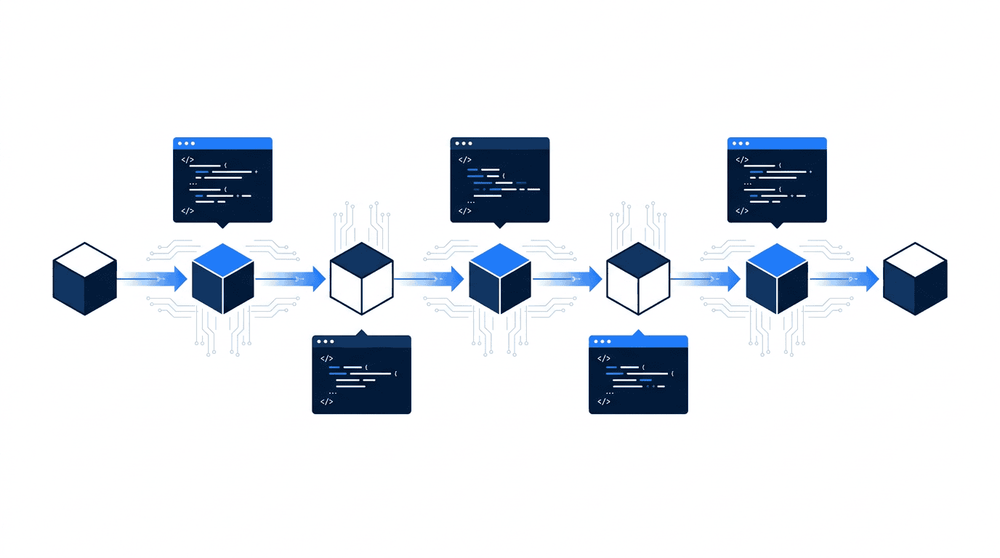
Smart contracts are self-executing programs stored on a blockchain that run automatically when predefined conditions are met. They remove the need for manual intermediaries—no escrow agents, no paper contracts, no back-and-forth approvals. Business logic is encoded directly on-chain, so once triggered, execution is deterministic and tamper-proof. We build smart contracts that handle real workflows: token transfers, multi-party approvals, royalty distributions, and access control—all auditable and running without a central authority.

When Blockchain Fits

Use this comparison to assess whether the trust, transparency, and multi-party requirements of your project justify a blockchain architecture over a conventional centralized system.

Centralized ArchitectureBlockchain-Based Architecture
Trust modelSingle authority controls and validates dataDistributed consensus — no single point of control
Data immutabilityRecords can be altered or deleted by administratorsEntries are cryptographically sealed and tamper-resistant
Multiple parties involvedOne organization owns and manages the systemMultiple independent parties share and verify the same ledger
Transparency requirementsAccess and audit trails controlled internallyTransactions visible and verifiable by all participants
Performance needsHigh throughput, low latency — well-suited for speedLower throughput; latency increases with network size
Infrastructure costLower operational cost at scaleHigher cost due to node operation and consensus overhead
Regulatory traceabilityAudit logs managed by one party — trust depends on themIndependent audit trail verifiable without relying on any single party
Image

How We Work

Every blockchain engagement starts with chain selection — we evaluate fit based on throughput, finality, and ecosystem maturity before a single line of code is written. From there, we design the architecture, build and test smart contracts, and prepare documentation for third-party audits. We handle deployment and post-launch monitoring, so clients move from concept to production with a single accountable partner across every phase.

Blockchain projects fail not because the technology is immature, but because the teams building them underestimate the gap between a proof of concept and a production-ready, auditable system. We bring hands-on experience across the full development lifecycle — from choosing the right ledger architecture and writing defensible smart contract logic, to integrating off-chain systems and structuring a deployment that survives a security audit. For Belgian companies operating under evolving EU digital asset and data regulations, that kind of technical grounding is not optional — it is the difference between a system your stakeholders can trust and one that quietly accumulates risk. If you are evaluating a technical partner for a blockchain initiative, we are ready to talk through your use case in concrete terms.

Frequently Asked Questions

Find answers to common questions about our services

Like what you see?

Get in touch and we will be happy to discuss your project.