Technologies
Cognito

Amazon Cognito is a fully managed identity and access management service provided by AWS, designed to handle user authentication, authorization, and user management for web and mobile applications. It allows developers to add sign-up, sign-in, and access control functionality to their applications without building and maintaining the underlying identity infrastructure themselves. Cognito scales to millions of users and supports authentication through social identity providers such as Google, Facebook, and Apple, as well as enterprise identity providers via SAML 2.0 and OpenID Connect.
At its core, Cognito is organized around two main components: User Pools and Identity Pools. User Pools act as a user directory that manages sign-up and sign-in, issuing tokens upon successful authentication. Identity Pools, sometimes called Federated Identities, grant authenticated users temporary AWS credentials so they can access other AWS services directly, such as S3 or DynamoDB. Together, these two components cover the full spectrum from end-user authentication to fine-grained AWS resource authorization.
Amazon Cognito is built around two distinct components: User Pools and Identity Pools (also called Federated Identities). A User Pool is a managed user directory that handles the full authentication lifecycle — registration, login, password recovery, multi-factor authentication, and token issuance. When a user successfully authenticates against a User Pool, Cognito returns a set of JSON Web Tokens (JWTs): an ID token carrying user claims, an access token for authorizing API calls, and a refresh token for obtaining new credentials without re-authentication.
Identity Pools serve a different purpose: they grant authenticated (and optionally unauthenticated) users temporary AWS credentials via AWS Security Token Service (STS), allowing those users to call AWS services directly, such as S3 or DynamoDB. The two components are often used together — a User Pool authenticates the user and produces a JWT, and an Identity Pool exchanges that JWT for short-lived AWS credentials scoped to an IAM role. This separation of concerns means authentication and AWS resource authorization are handled independently, giving developers fine-grained control over both flows.
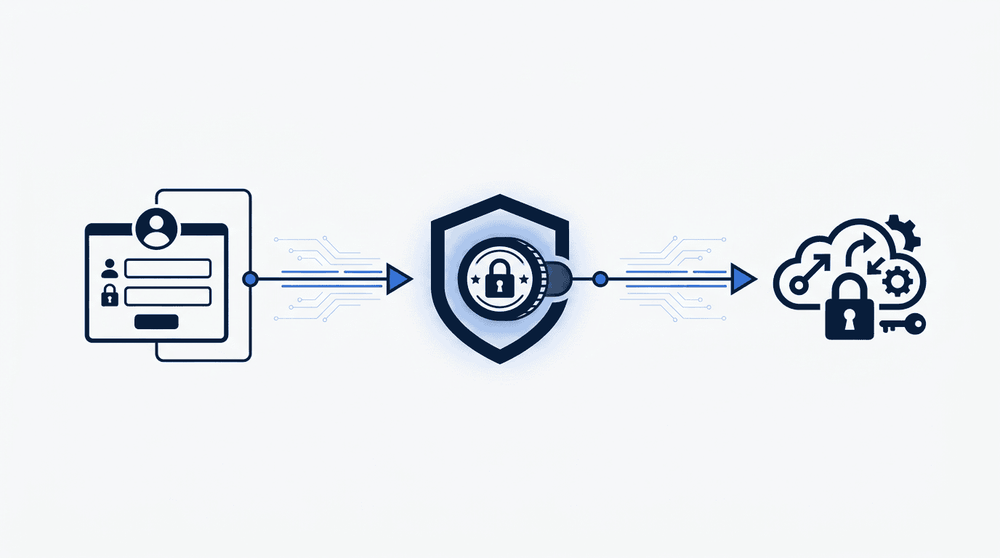
When a user authenticates through a User Pool, Cognito issues three tokens: an ID token, an access token, and a refresh token. The application then presents these tokens to an Identity Pool, which validates them and exchanges them for short-lived AWS credentials via AWS STS. Those temporary credentials grant the user scoped access to AWS services—such as S3 or DynamoDB—without exposing long-term keys. This two-stage flow separates identity verification from resource authorization.
Cognito provides a hosted UI out of the box, giving applications a ready-made set of sign-up, sign-in, and password-reset screens that can be customized with a custom domain and branding. Beyond this baseline, it supports social identity federation with providers such as Google, Facebook, and Apple, as well as enterprise federation via SAML 2.0 and OpenID Connect (OIDC), allowing organizations to connect existing corporate identity systems to Cognito User Pools without rewriting authentication logic.
On the security side, Cognito supports multi-factor authentication (MFA) through time-based one-time passwords (TOTP) and SMS codes, and it can enforce adaptive authentication that flags anomalous sign-in attempts. After a successful authentication, Cognito issues standards-based tokens—an ID token, an access token, and a refresh token—formatted as JWTs and conforming to the OAuth 2.0 and OpenID Connect specifications, which means downstream services and libraries that understand these standards can verify and consume them without Cognito-specific code.
Comparison of Cognito against common identity and authentication alternatives across pricing, AWS integration depth, and customisation flexibility.
One of Cognito's most significant advantages is its tight integration with the AWS ecosystem. User pools and identity pools connect natively to services like API Gateway, Lambda, and IAM, which reduces the amount of custom authorization logic developers need to write and maintain. Cognito is also a managed service, meaning AWS handles infrastructure provisioning, patching, and availability — teams do not need to operate their own authentication servers or worry about scaling login infrastructure under sudden traffic spikes. The service supports millions of users per pool, making it a practical choice for applications that expect significant growth without requiring architectural changes.
On the other side, Cognito carries some well-documented limitations. The hosted UI offers only surface-level customisation, which can be a constraint for teams that need a fully branded authentication experience. Pricing can also become difficult to predict at scale: while a generous free tier covers the first 50,000 monthly active users, costs for advanced security features such as adaptive authentication and compromised credential detection are charged separately and can accumulate quickly for larger user bases. The service's complexity — particularly around the distinction between user pools and identity pools, and the nuances of token handling — has a steeper learning curve than some simpler hosted authentication alternatives.
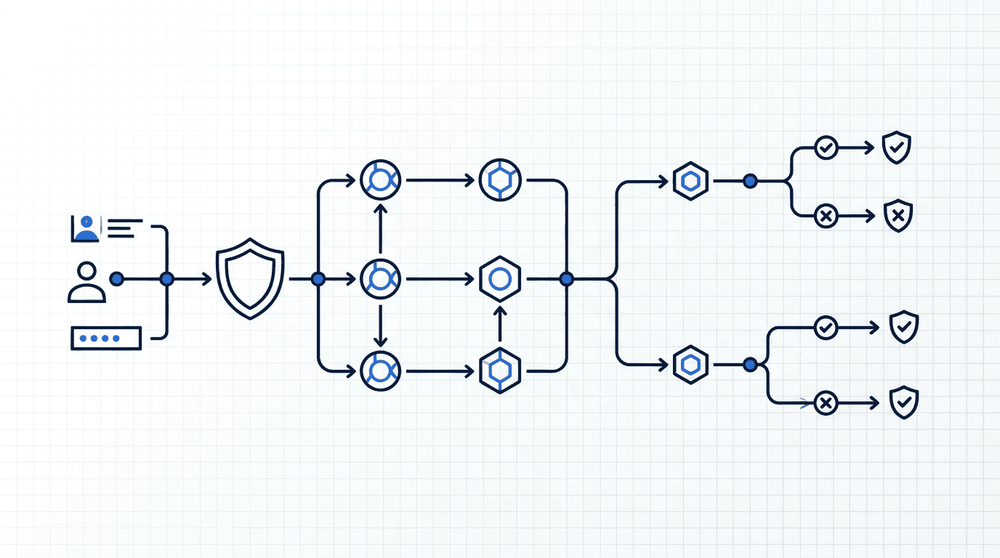
Cognito is most often adopted in three scenarios. First, mobile and web applications use it to handle user sign-in without building custom authentication infrastructure. Second, teams secure AWS API Gateway and AppSync endpoints by attaching Cognito User Pool authorizers, ensuring only authenticated requests reach backend services. Third, enterprises federate existing identity providers—such as Active Directory via SAML—so employees authenticate with corporate credentials rather than a separate account.
Amazon Cognito occupies a well-defined niche as a managed identity service designed to handle user authentication, authorization, and user management at scale, without requiring teams to build and maintain that infrastructure themselves. Its integration with the AWS ecosystem makes it a natural fit for applications already running on AWS, where consistent IAM policies, Lambda triggers, and API Gateway authorizers can all work in concert. The trade-off is a degree of vendor lock-in and an API surface that can feel complex relative to simpler authentication providers, particularly for teams whose requirements fit neatly within standard OAuth 2.0 flows but who find Cognito's hosted UI limiting in terms of customization.
Cognito is well-suited to projects that need scalable, standards-compliant authentication with fine-grained AWS service access—especially mobile backends, multi-tenant SaaS applications, and systems requiring federated identity from social or enterprise identity providers. It is less compelling for teams outside the AWS ecosystem, projects with highly customized login experiences, or organizations that require full data sovereignty and prefer self-hosted identity solutions. Understanding these boundaries helps teams make an informed decision about whether Cognito's managed convenience aligns with their architectural requirements or whether an alternative identity platform better serves their needs.