Technologies
Watson

IBM Watson is an artificial intelligence platform developed by IBM that provides a suite of cloud-based services, including natural language processing (NLP), machine learning, and data analysis. Originally designed as a question-answering system, Watson has evolved into a broad set of APIs and tools that allow developers and enterprises to embed AI capabilities into their own applications without building models from scratch. Its primary audience includes organizations in industries such as healthcare, finance, retail, and customer service that want to apply AI to structured and unstructured data at scale.
Watson is positioned as an enterprise-grade platform rather than a consumer product, meaning its services are aimed at businesses and development teams that need to process large volumes of data, automate decision-making, or build intelligent interfaces such as chatbots and virtual assistants. The platform offers pre-built models that can be customized with domain-specific training data, giving organizations a starting point that reduces the time and expertise required to deploy AI-powered features in production environments.
Watson originated as a research project at IBM with a specific and ambitious goal: to build a system capable of answering questions posed in natural language with enough accuracy and speed to compete against human champions on the quiz show Jeopardy!. The project, led by a team of IBM researchers, culminated in a landmark public demonstration in February 2011, when Watson defeated two of the show's all-time top competitors, Ken Jennings and Brad Rutter. The victory drew widespread attention because it demonstrated that a machine could parse ambiguous, idiomatic English clues and retrieve precise answers within seconds—capabilities that had long been considered difficult challenges for artificial intelligence.
Following its Jeopardy! success, IBM repositioned Watson from a single-purpose question-answering system into a broader commercial platform for enterprise AI. Over the following years, IBM expanded Watson into a suite of cloud-based services covering areas such as natural language processing, machine learning, speech recognition, and computer vision. These services were made available to developers and organizations through APIs, allowing businesses across industries—including healthcare, finance, and customer service—to integrate Watson's capabilities into their own applications without building underlying AI models from scratch.
Watson operates as a collection of discrete AI services, each targeting a specific cognitive task and exposed through REST APIs. Core capabilities include Natural Language Understanding, which extracts entities, sentiment, and semantic relationships from text; Speech to Text and Text to Speech, which handle bidirectional audio–language conversion; and Visual Recognition, which classifies and detects objects within images. Developers integrate these capabilities into their own applications by sending HTTP requests to IBM Cloud endpoints, receiving structured JSON responses that encode the model's output.
Rather than exposing a single monolithic model, Watson's API-driven architecture allows teams to select only the services relevant to their use case and combine them as needed. Authentication is handled through IBM Cloud IAM, and most services support both pre-trained models and custom models that can be fine-tuned on domain-specific data. This modular design means a customer-service application might call Natural Language Understanding to classify an incoming message and then route that structured output to a downstream business logic layer, without the developer needing to manage the underlying model infrastructure.
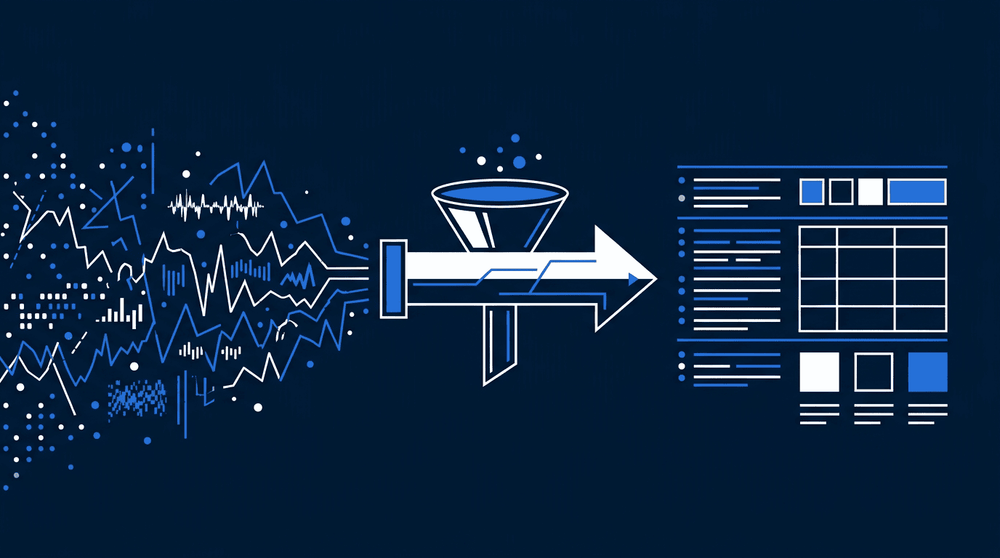
Watson exposes its capabilities through a set of REST APIs that applications call at runtime. Raw input—text, audio, or images—is sent to the relevant service endpoint, where Watson's models process and analyze it. The pipeline returns structured output such as classified intents, extracted entities, or transcribed text, which the application then consumes. This architecture keeps Watson's processing separate from application logic, making it straightforward to swap or combine services without restructuring the broader codebase.
Watson sees its broadest adoption in healthcare, where it assists clinicians by processing medical literature, patient records, and clinical trial data to surface relevant treatment options. In customer service, organizations deploy Watson Assistant to build conversational chatbots and virtual agents that handle routine inquiries at scale, reducing the volume of work routed to human agents. Financial institutions use Watson for tasks such as risk analysis, fraud detection, and regulatory compliance, drawing on its ability to read and interpret large volumes of unstructured documents like contracts and earnings reports.
Beyond these sectors, Watson is also applied to enterprise knowledge management, where it powers internal search tools and document discovery systems that help employees locate relevant information across large, distributed content repositories. In manufacturing and supply chain contexts, Watson-based solutions analyze operational data to support predictive maintenance and process optimization. The common thread across these deployments is Watson's orientation toward tasks that involve synthesizing large volumes of mixed-format information—structured data, natural language documents, and audio or visual inputs—rather than simpler, rule-based automation.
Comparison of Watson against major AI/ML cloud platforms across NLP capability, deployment flexibility, and pricing approach. Each platform reflects different strengths depending on enterprise requirements.
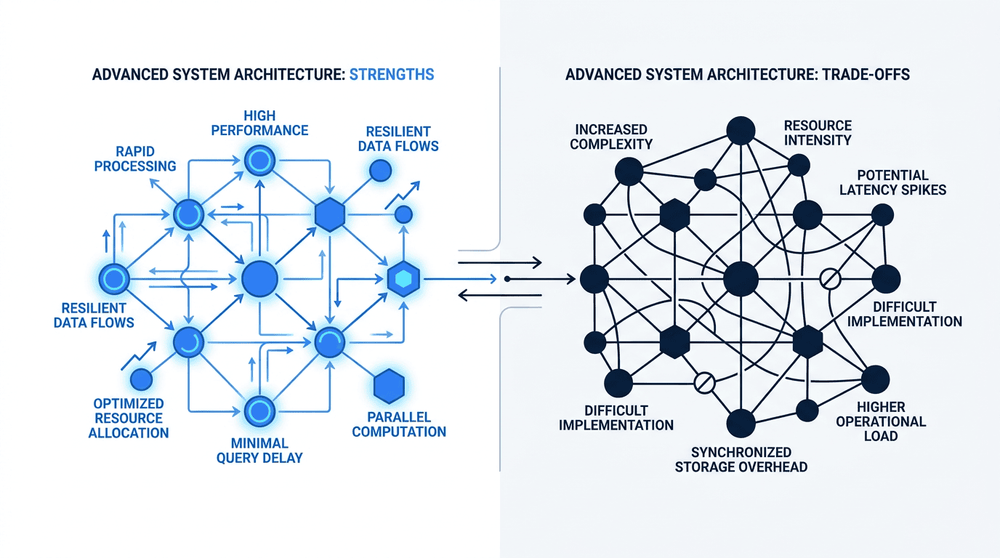
Watson's enterprise focus and pre-built models for NLP, vision, and speech make it practical for organizations that want AI capabilities without building models from scratch. Its natural language processing layer is mature and has been validated across regulated industries such as healthcare and finance. On the other side, pricing can be difficult to predict at scale, the developer community is narrower than open-source alternatives, and tight integration with IBM Cloud infrastructure raises genuine vendor lock-in concerns for teams that want flexibility.
Watson occupies a distinct position in the enterprise AI landscape as a platform built from the ground up for regulated, data-sensitive industries rather than general-purpose consumer applications. Its strongest fit is with organizations in sectors such as healthcare, financial services, and the public sector, where explainability, data governance, and compliance are non-negotiable requirements. The platform's suite of tools — spanning natural language processing, machine learning model management, and AI lifecycle governance — is designed to meet these demands at scale. Enterprises that need to deploy AI with auditability and trust at the core of the solution, rather than as an afterthought, are the primary audience Watson was built to serve.
For projects that involve building and operationalizing custom models on proprietary data, automating knowledge-intensive workflows, or embedding conversational AI into enterprise systems, Watson provides a coherent set of integrated services through its IBM Cloud and hybrid cloud deployment options. It is less suited to rapid prototyping or lightweight use cases where simpler, lower-cost tools may be sufficient. Organizations evaluating Watson should weigh its deep governance capabilities and industry-specific pre-built models against its steeper learning curve and the organizational investment required to adopt the broader IBM ecosystem effectively. When those tradeoffs align with a project's requirements, Watson remains one of the more mature and capable enterprise AI platforms available.