Hosting & Cloud

When you ship a product, the infrastructure behind it matters as much as the code itself — but managing servers, deployment pipelines, uptime monitoring, and cloud configuration shouldn't pull your team away from building. We take ownership of the full hosting and cloud layer: provisioning environments, setting up CI/CD pipelines, configuring cloud services, and keeping everything running reliably in production. That means your team stays focused on the product, while we handle the operational complexity that comes with running software at scale. Whether you're launching something new or moving an existing system to a more resilient setup, we work with you to choose the right infrastructure for your actual requirements — not the most fashionable one.

Docker

Ship fast. Stay online.

What We Set Up

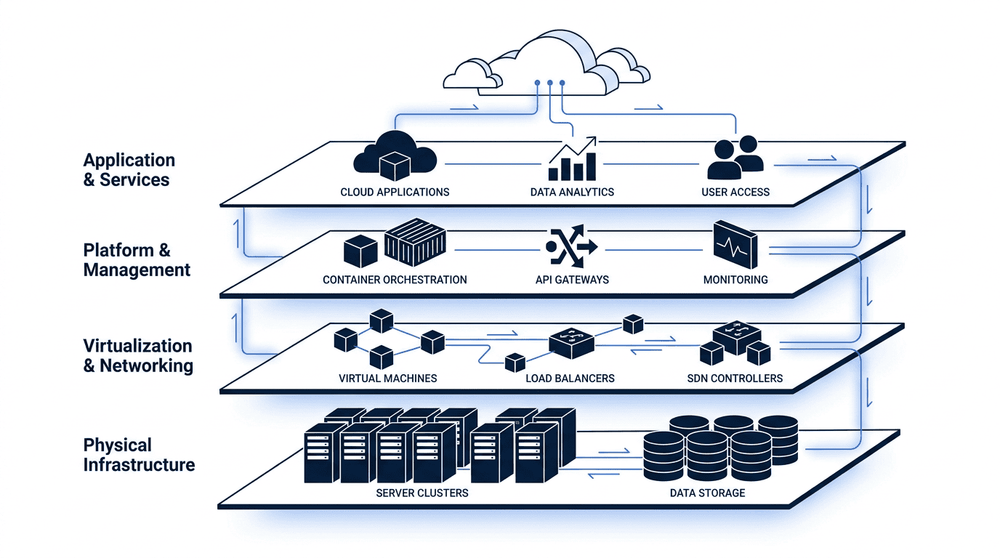
We provision and configure cloud environments on AWS, Google Cloud Platform, or Azure — whichever platform best fits your project's requirements, your team's existing tooling, or your compliance obligations. From the outset, we design infrastructure with scalability in mind: compute resources, managed databases, networking, and storage are all sized and structured so that capacity can grow without requiring a full rebuild. Nothing is set up ad hoc; every environment is defined as code so it can be reproduced, audited, and version-controlled alongside the application itself.

Alongside the cloud environment, we build out CI/CD pipelines that automate testing, building, and deployment from the moment code is pushed. Containerisation using Docker and orchestration with Kubernetes (or managed equivalents like ECS or Cloud Run) means application workloads are portable, isolated, and straightforward to scale horizontally. The result is an infrastructure layer that your team can hand off to us to operate, or that we can document and transition to your own engineers once the product is stable.
Image

Infrastructure That Scales

A well-architected cloud setup separates production, staging, and development environments from day one — so new code is tested before it ever reaches real users. Auto-scaling groups handle traffic spikes without manual intervention, and blue-green or rolling deployments mean updates ship with zero downtime. We configure these patterns as standard, not as afterthoughts, so the infrastructure your product runs on grows with your user base rather than against it.

Basic Hosting vs. Cloud Architecture

A direct comparison of shared hosting and managed cloud setups across the criteria that matter most when choosing infrastructure for a production application.

Basic Shared HostingManaged Cloud Architecture
InfrastructureShared server resources with fixed capacityDedicated, scalable resources provisioned on demand
ScalabilityManual upgrades required; downtime likelyAuto-scaling handles traffic spikes without intervention
Availability / UptimeTypically 99–99.9%; no redundancy guarantees99.95%+ SLA common; multi-zone redundancy built in
Deployment ProcessFTP or control panel; no CI/CD pipelineAutomated pipelines (CI/CD) with rollback support
Security & ComplianceBasic firewall; shared environment raises exposureIsolated environment, managed secrets, audit logging
Monitoring & AlertingMinimal; host provides basic uptime checksFull observability stack: metrics, logs, and alerts
Cost ModelLow fixed monthly fee; limited headroomUsage-based; higher floor cost, scales with demand
Suitable ForBrochure sites, low-traffic static contentProduction apps, APIs, and data-intensive workloads
Image

Always-On Observability

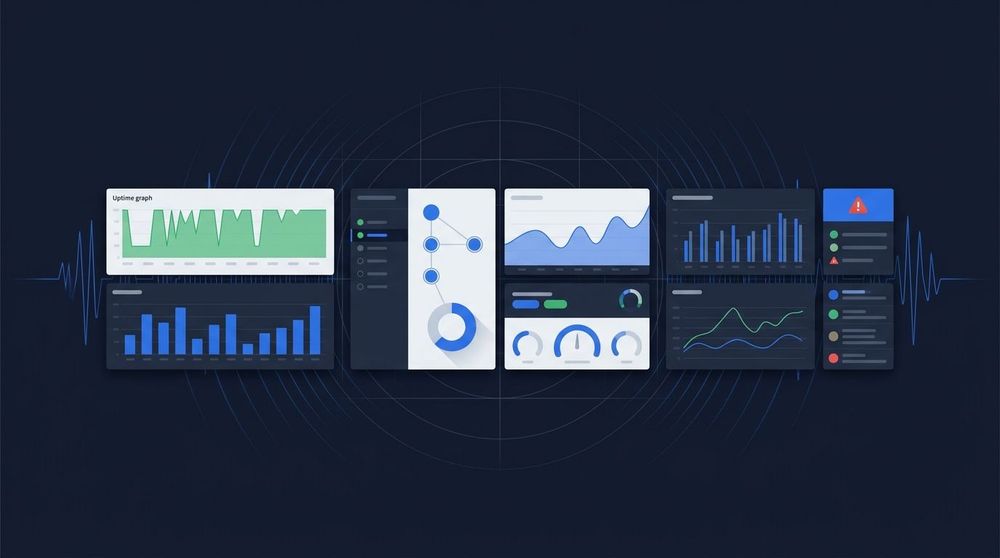
We wire monitoring, logging, and alerting into every environment from the start — not as an afterthought. Dashboards track resource usage, error rates, and latency in real time. Alerts fire before a slow query becomes a downed service. When something does go wrong, structured logs mean we diagnose and fix it fast, before your users notice anything is off.

Infrastructure is not something you bolt on after a product ships — it is a foundational decision that determines whether your application stays available, scales under pressure, and recovers when something goes wrong. We treat hosting and cloud architecture as a first-class engineering concern, designing environments from the ground up with reliability, security, and operational clarity in mind. Every deployment pipeline, every monitoring setup, and every failover strategy we put in place is built to give you a product your users can depend on — not just on launch day, but for the full lifetime of the product.

Frequently Asked Questions

Find answers to common questions about our services

Like what you see?

Get in touch and we will be happy to discuss your project.